Space Research and Observation Technologies
The research unit studies near space, the space effects on Earth's upper atmosphere and the planets of the solar system. In addition, the unit develops new technologies for space research and weather radar measurements.
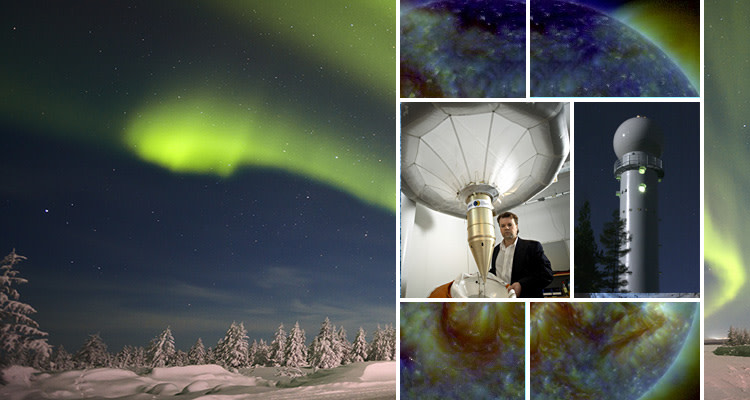
Planetary research in the unit is motivated by the goal to better understand Earth's atmosphere through comparisons with other planetary atmospheres. The research on space weather seeks to minimize the hazards for technical systems and to facilitate tourism and aurora watching. New methods in radar technology can provide more accurate and more versatile information needed to improve short term weather forecasting.
The unit has the following three groups:
Space Weather Research
The group studies electro-magnetic phenomena in near space and the upper atmosphere that are generally known as space weather. The group develops forecasting methods and creates meaningful products and services for the society. The group is responsible for the space weather services provided by the Finnish Meteorological Institute including daily aurora forecasts and alerts for authorities during severe space storms. The magnetic field measurements in Finland are monitored by the group.
More in FMI-SPACE Space Weather Research.
Nowcasting and Intelligent Traffic Weather Research
The research group studies and develops new polarisation radar and satellite-based methods for measuring and predicting atmospheric phenomena such as precipitation, storms and wind using weather radar networks, satellites and other observation systems. The group examines and develops advanced multi-technology detection and analysis systems for smart traffic measurement and test systems. Methods based on polarisation radars are used to improve short-range forecasting and automatic classification methods for sites. The group conducts research in close cooperation with e.g. University of Helsinki and Aalto University, Vaisala Oyj and many other commercial operators. The group operates in Sodankylä and Helsinki.
More in FMI-SPACE Weather Nowcasting and Intelligent Traffic.
Space Research and Technology
The group studies near-Earth space and bodies within the solar system, focusing on phenomena and topics related to space situational awareness and comparative research on atmospheres. It is developing the plasma brake, which enables controlled deorbiting of satellites into Earth’s atmosphere at the end of their operational life, as well as the electric sail, which could serve as a propulsion source for probes in the future. The group contributes to the development and operational activities of the Space Situational Awareness Center, for example by producing and analyzing satellite orbit calculations and space debris monitoring data.
More in FMI-SPACE Space Research and Technology