Meteorological Research Applications
The Meteorological Research Applications group is responsible for the research and development of new forecast applications to complement the weather forecasts. Essential topics are the development of the road weather, wind- and solar power forecasts based on the weather forecast. Our research and development comprise also post processing and calibration methods, that aim in removing systematic errors and correcting uncertainty of the probabilistic forecasts. We use a wide variety of models, observations and data driven methods. We support also the international expert services aiming to improve the operations of national weather services.
Road weather modelling
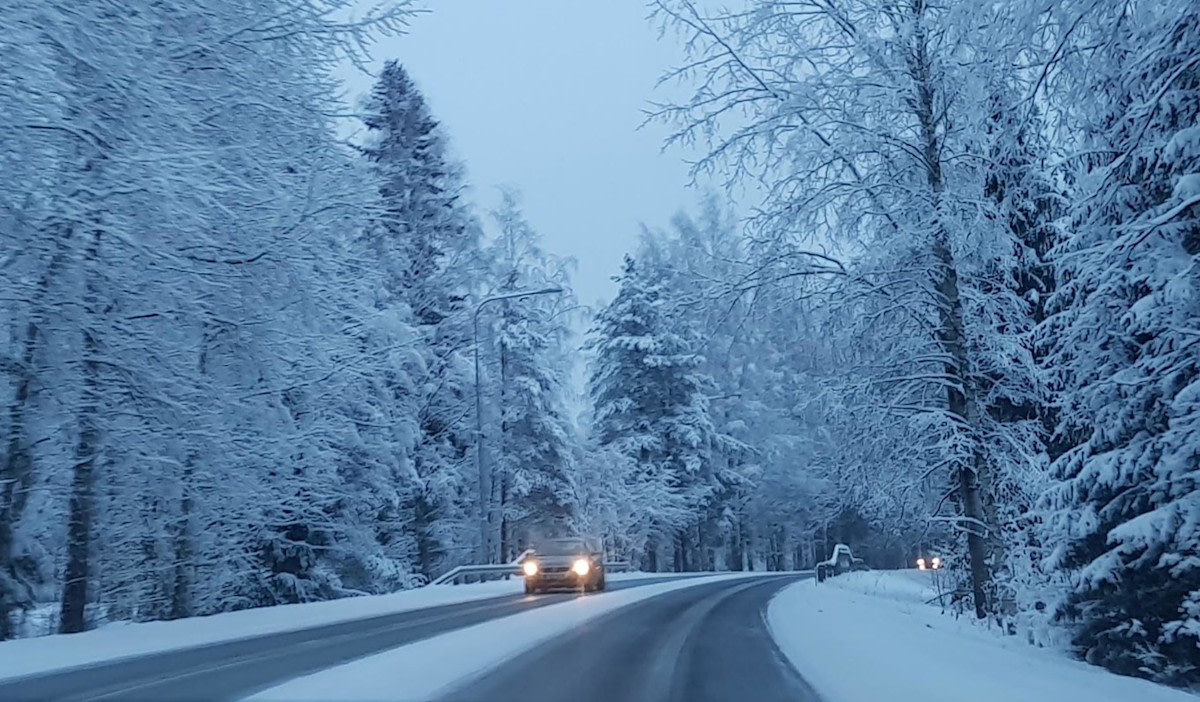
Our research on road weather aims in developing and improving the road weather model. In the course of the years, our researchers have included the forecasts of friction coefficient, blowing snow, and pedestrian weather in the road weather model. We aim in constantly improving the forecasts quality, for example by using data driven methods to improve the forecasts. Many research projects are done in collaboration with the Nowcasting and Intelligent Traffic Weather Research that operates in Sodankylä.
Timely research questions in road weather are:
Use of IoT (Internet of things) technology
Improving the road weather forecasts using data driven methods
Developing road weather services for heavy vehicles
Solar and wind power
Weather’s impact on solar and wind power production is an essential study topic in our group. Our research supports the development of solar and wind power forecasts . Wind power production varies strongly following the wind speed. In winter, the icing of the wind turbines can reduce the production. Solar power production depends above all on the cloudiness and time of the year. Snow cover causes production losses in winter and spring, and high temperatures can reduce production in summer.
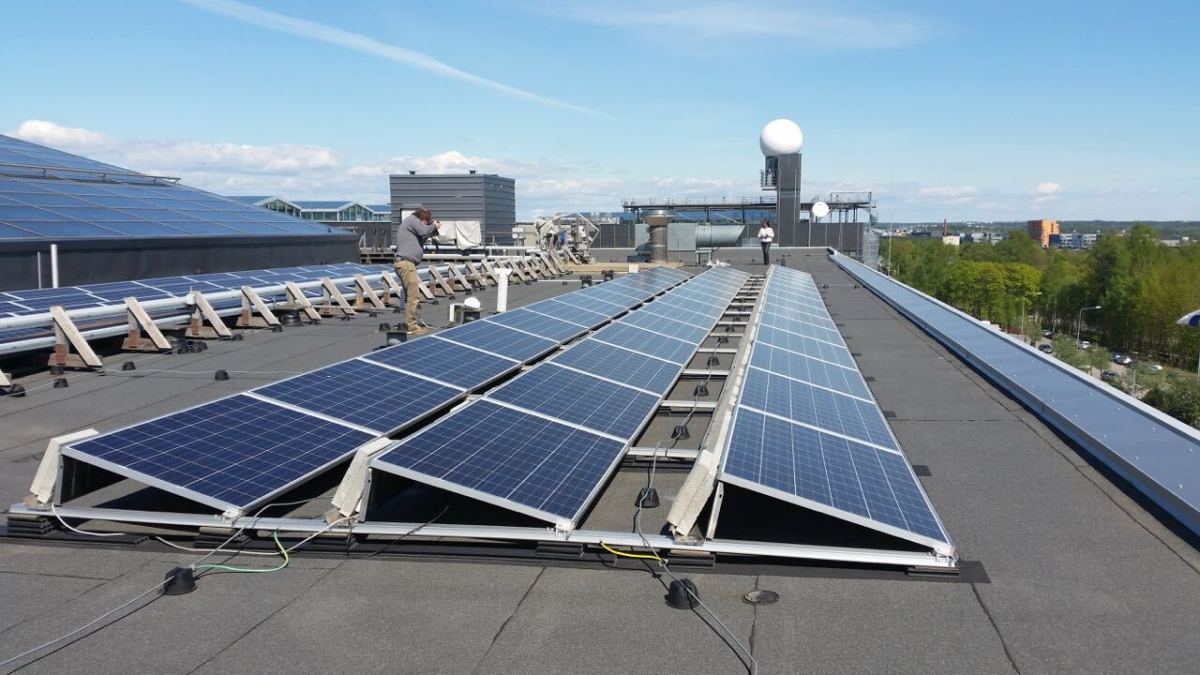
The photo is from Helsinki, where a 21 kilowatt solar power plant has been installed on the roof of FMI’s office building. In addition to electricity production, other interesting variables are also measured in connection with the plant, such as solar radiation on surfaces in different directions and the temperature of the panels. A similar solar power plant with measuring equipment can be found at FMI’s regional office in Kuopio, and there is also a small research power plant with a few panels in FMI’s regional office in Sodankylä and Utö.
Data-driven applications and forecasts
Traditional weather forecasts are based on physics equations, that are solved with computers using numerical methods. These are referred to as Numerical Weather Prediction (NWP) models. In addition to NWP, data driven methods and models are becoming more essential in weather prediction. Data-driven methods process large amounts of observational and model data using statistical and machine learning approaches. Our group uses data-driven methods in forecast post processing, road weather modelling, and the development of data-driven weather forecast model.
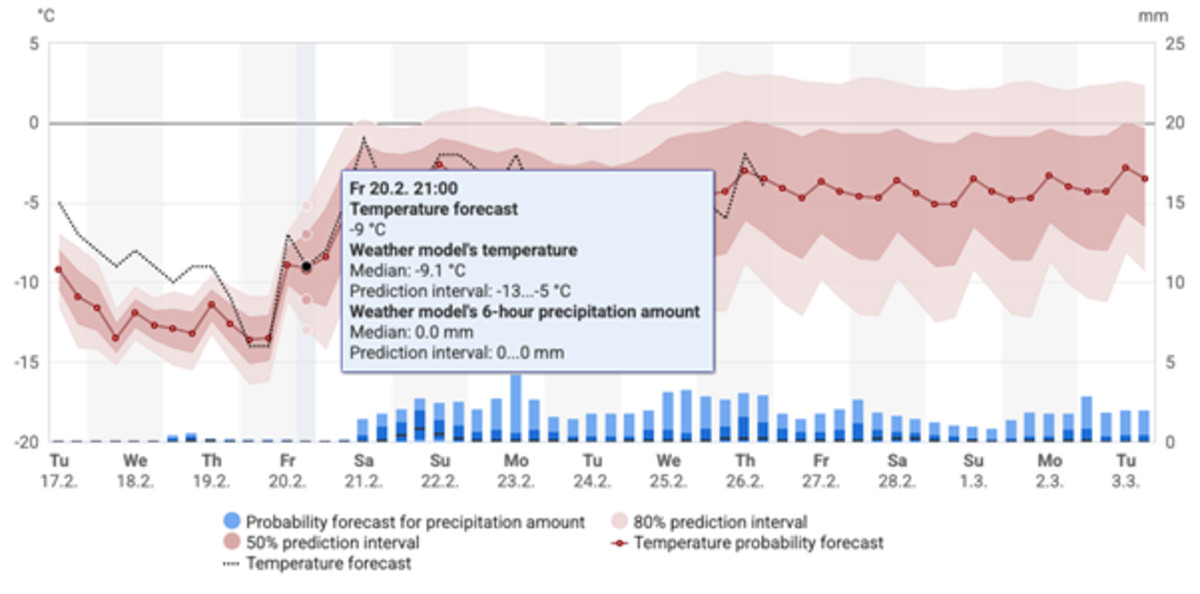
Many weather variables, such as surface temperature, depend on local conditions and may be sensitive to weather types that are difficult for NWP models to capture. Using statistical machine learning methods, these errors can be corrected. For example, the 15-day forecasts on the IL local weather website, which are presented as probabilities generated using forecast ensembles. The forecasts on the website have been statistically corrected, so that the uncertainty estimates of the forecasts better correspond to the forecast error that has occurred in the past.
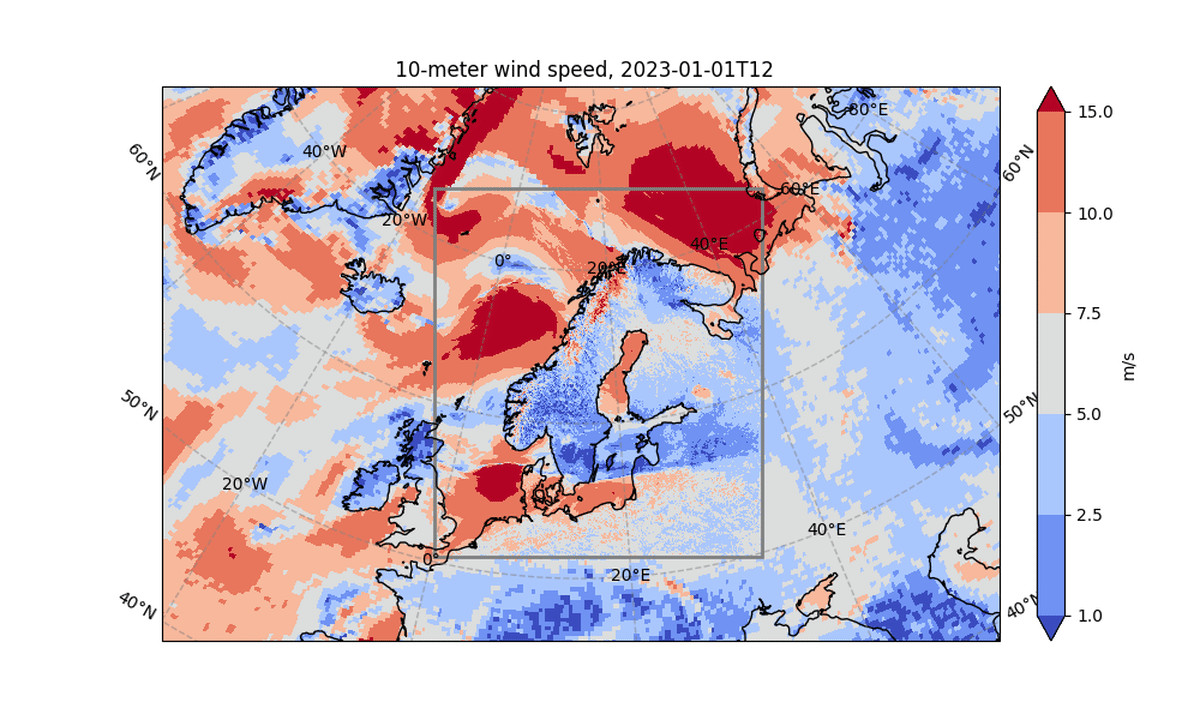
In addition, we develop the FMI’s data-driven weather forecast model Aila in international and in-house collaboration. Aila can produce high resolution forecasts for Northern Europe. FMI aims to use Aila operationally side by side with physics-based and data-driven forecasts developed and maintained by other forecast centers.