Protecting the Skin from Sunlight
The best way to protect the skin is by wearing appropriate clothing and seeking shade during the midday sun. Adopting a midday rest, or “siesta,” is a healthy habit in many ways.
UV radiation cannot be felt on the skin. Therefore, do not forget to protect yourself from UV radiation even on windy or cool days when the UV Index is 3 or higher.
Sunscreens can help prevent sunburn by absorbing or blocking the part of UV radiation that causes skin reddening. However, sunscreens cannot completely prevent harmful radiation from reaching the skin and causing cellular damage. For this reason, sunscreen should not be used to prolong time spent in the sun.
Sunscreen should be used to complement other protective measures. It should be applied generously to exposed areas of the body, such as the face and hands, and reapplied frequently. The sun protection factor (SPF) should be at least 30, and for children preferably 50. The protection should cover both UV-B and UV-A radiation.
Children are more sensitive to the harmful effects of UV radiation. Repeated sunburns in childhood, as well as high cumulative lifetime exposure to UV radiation, increase the risk of skin cancer later in life.
The best way to protect the eyes from UV radiation is to wear a hat that provides shade and sunglasses. High-quality sunglasses not only filter UV radiation effectively but also protect the eyes from radiation entering from the sides.
Protecting Children Is Important
Parents should pay particular attention to protecting children from UV radiation. Clothing and a wide-brimmed hat provide the easiest protection for areas that burn most easily, such as the shoulders, neck, and arms. A hat also helps protect the face and eyes.
For children, sunscreen products specifically designed for their skin should be used.
Sunscreens are not recommended for children under two years of age. For infants and toddlers, protection should primarily be provided by clothing and by avoiding direct exposure to strong sunlight.
What factors affect UV exposure?
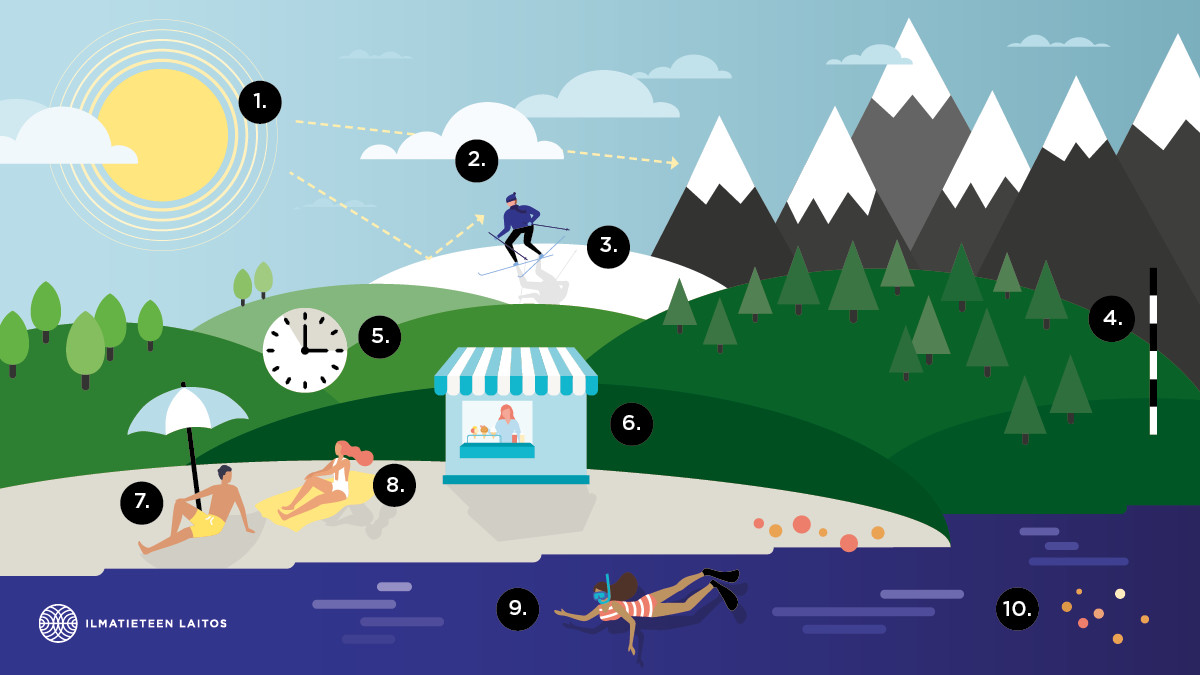
1. The higher the sun is in the sky, the stronger the UV radiation. You need protection at the latest when your shadow is shorter than you are.
2. UV radiation passes through clouds more easily than visible light. This means you can still be exposed to excessive UV radiation on cloudy days. Up to 90% of UV radiation can penetrate thin cloud cover, while thick rain clouds reduce UV radiation to very low levels.
On a clear day, about half of the UV radiation reaches you directly from the sun, and the other half comes from all parts of the sky as scattered radiation. In open environments—such as on water, at the beach, in fields, wetlands or mountainous areas UV exposure can therefore be surprisingly high.
3. Different surfaces reflect UV radiation to varying degrees. Fresh snow can reflect more than 90% of UV radiation, significantly increasing exposure.
4. UV radiation increases by approximately 10–12% for every kilometer of altitude gained.
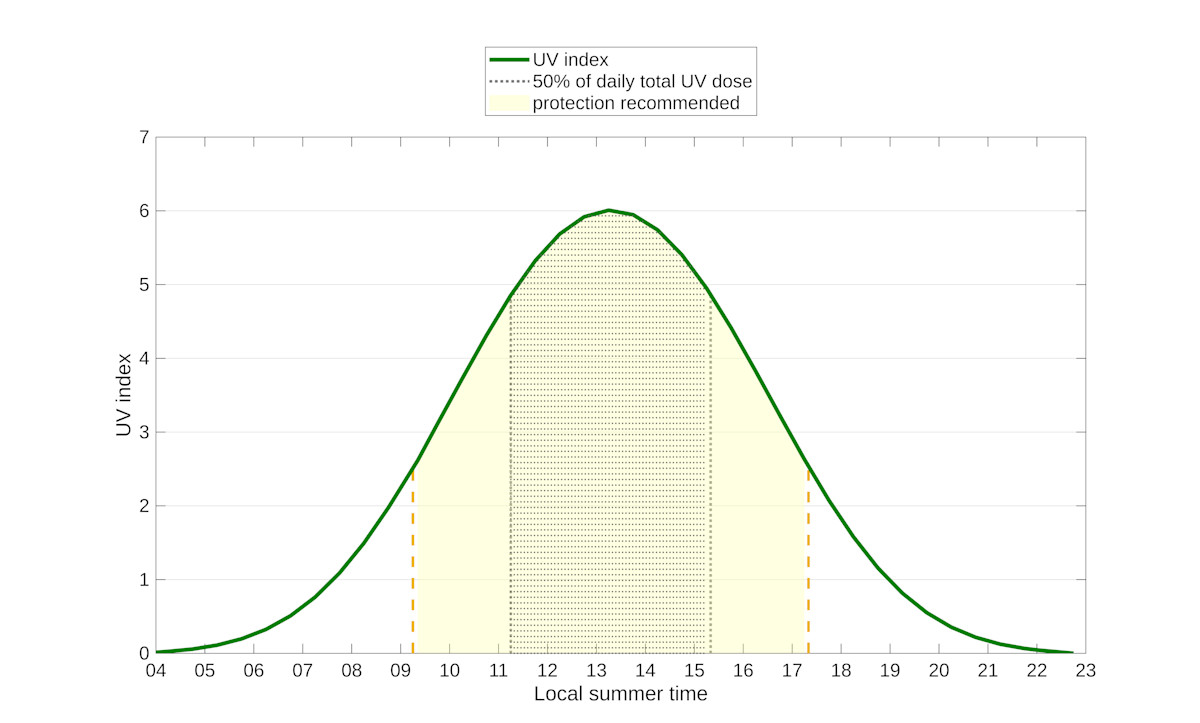
5. On a summer day, about half of the total daily UV radiation occurs between 11:00 and 15:00. In the early morning and evening, protection from UV radiation is generally not necessary. As a rule of thumb, protection is recommended when the UV Index exceeds 3. In southern Finland on a clear midsummer day, this typically occurs around 10:00, and the UV Index falls below 3 again at about 17:00.
6. Depending on lifestyle, a person who works indoors receives less than 20% of the annual UV dose received by someone who works outdoors.
7. You can still tan in the shade. Shade protects you from direct sunlight, but you may still receive around 50% of UV radiation due to scattered radiation from the sky and reflections from the surroundings.
8. Light-colored sand reflects about 20% of UV radiation. Depending on the elevation of the sun, a person sunbathing while lying down may receive considerably more UV radiation than a person standing upright. If outdoor activity involves movement or changing posture, such as walking, playing or working, the amount of UV radiation reaching the skin is usually lower than during sunbathing in a horizontal position.
9. UV radiation also penetrates clear water. At a depth of half a meter, about 40% of UV radiation may still remain. This means that you can be exposed to UV radiation while swimming.
10. UV radiation is one of the most important environmental factors contributing to the formation of microplastics. It initiates the breakdown of plastic litter, for example plastic waste that ends up on beaches.