Slipperiness and pedestrian weather
The Finnish Meteorological Institute’s weather warning for pedestrian helps the public better prepare for extremely slippery conditions. Typically, there are five to twenty days per year per region. However, slippery and locally extremely slippery conditions occur much more frequently.
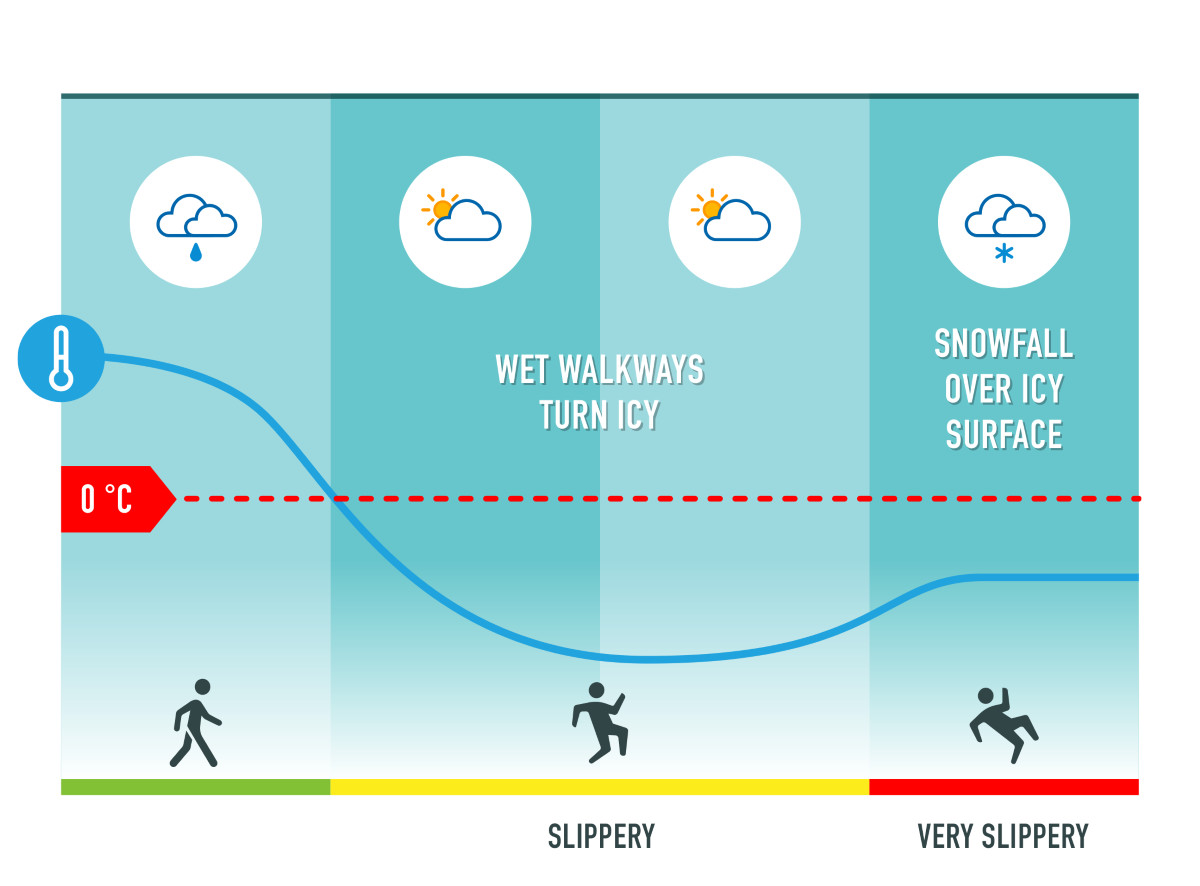
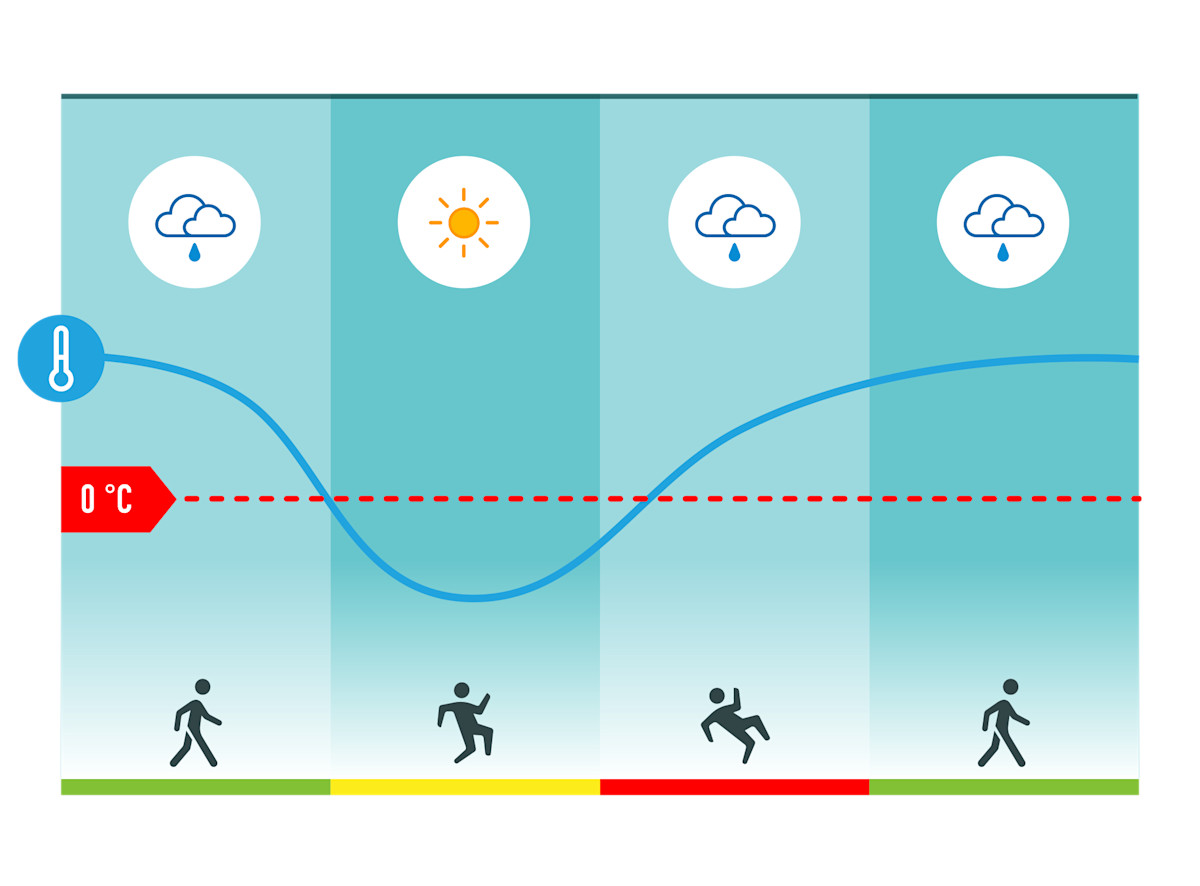
It is extremely slippery when:
Snow falls on ice.
Rain falls on ice, or a layer of water forms on the ice due to melting.
Snow becomes hard-packed slippery after heavy snowfall, and the temperature hovers around or just below freezing.
Slush that has frozen into hard and uneven ice.
When it is extremely slippery, in addition to caution, one needs shoes with good grip and aids such as anti-slip devices.
Pedestrian weather warning tells the cause and timing of slipperiness.
Slipping accidents are expensive
In Finland, around 50,000 slipping accidents occur each winter due to ice. According to VTT (the Technical Research Centre of Finland), these lead to costs of 2.4 billion euros, covering healthcare expenses, sick leave, and loss of well-being.
People under 30 slip the most
People aged 50–60 most often require medical care.
The risk of hip fractures increases for those over 70.
Pedestrian conditions are assessed using the pedestrian index
The warning is determined using a pedestrian index. The pedestrian index is calculated based on a model that describes conditions on pedestrian and cycling paths. It assesses whether there is ice, water, snow, or frost. The calculations utilize:
Weather observations from the past four days.
Observations of current weather conditions, such as temperature.
Weather forecasts for the next two days
The model has been developed in collaboration with the Finnish Institute of Occupational Health, using slipperiness measurements.