Finnish Meteorological Institute trained Moldovan and Ukrainian experts in air quality dispersion modelling

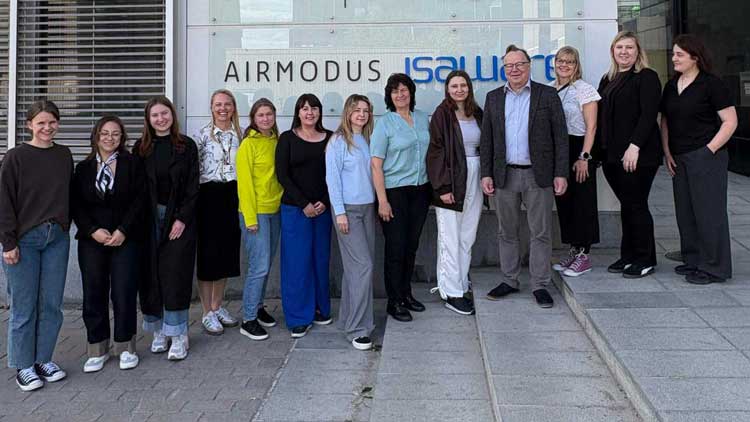
The Finnish Meteorological Institute (FMI) organized a two-week training programme on air quality dispersion modelling from 18 to 29 May 2026 in Helsinki, Finland. The training brought together specialists from Moldova and Ukraine and marked an important step in strengthening national capacities for air quality monitoring, assessment, and management in line with European Union requirements.
The training was implemented under two international cooperation initiatives: the EU-funded Twinning Moldova Project Air Quality and Environment and the Ukraine–Finland Air Quality Monitoring (UFAIR) project funded by the Ministry for Foreign Affairs of Finland. Both projects support Moldova and Ukraine in their efforts to align environmental governance and air quality management practices with EU legislation.
Dispersion modelling supports air quality management
As Moldova and Ukraine advance on their path towards European Union membership, both countries are undertaking extensive reforms to harmonize their environmental legislation and air quality monitoring systems with EU standards. In addition to developing legislation and expanding monitoring networks, strengthening expertise in air quality modelling is essential for modern air quality management and evidence-based policymaking.
Air quality dispersion modelling is one of the key components of the EU air quality assessment framework. It enables authorities to evaluate the impacts of emissions on ambient air quality, identify pollution hotspots, assess population exposure, and support the development of effective air quality policies.
Modelling results are widely used in environmental permitting, urban planning, air quality assessments, emission reduction strategies, and the preparation of air quality plans and monitoring programmes.
Training supported countries in meeting European environmental standards
The FMI training programme was designed as a practical, hands-on course, allowing participants to carry out modelling exercises under the guidance of FMI experts. A case study based on traffic emissions in Chișinău, the capital of Moldova, provided participants with an opportunity to apply modelling tools to real-world scenarios and learn how to interpret results for decision-making purposes. The exercises utilized air quality dispersion models developed by FMI.
By strengthening technical expertise and institutional capacity, the training contributes to the long-term development of air quality management systems in Moldova and Ukraine, supporting both countries in meeting European environmental standards, protecting public health, and enhancing cooperation between the countries.
Further information:
Maija Ylinen, Moldova Twinning RTA, tel. +358 50 408 2844, maija.ylinen@fmi.fi
Jenni Latikka, UFAIR Project Manager, tel. +358 50 453 2163, jenni.latikka@fmi.fi