Model serves its purpose
Atmospheric model is a generic name denoting different types of computer models simulating the behaviour of the atmosphere. They can be divided into two main types: weather forecast models and climate models. Although both deal with the atmosphere using the same type of physical equations, they differ in structure and usage. Weather forecast models are used to predict the short-term, detailed behaviour of the atmosphere, while climate models address the average behaviour of the atmosphere over much longer time span, typically hundreds of years or maybe even longer times.
While the chaotic behaviour of the atmosphere complicates the production of accurate short-term forecasts, it is not such a limiting factor for climate models, where we are mostly interested in longer time averages.
Weather forecast models can further be divided into two main types:
global models
limited area models (LAM)
As their name suggests, global models deal with the atmosphere as a whole. They are big and computationally expensive, i.e. demanding a lot of computer power. LAM models, on the other hand, limit themselves to a smaller part of the atmosphere, to achieve better local accuracy and resolution with the same computer resources. These model types are coupled by that global models provide the boundaries for the LAM models, i.e. they tell how the weather is behaving at the boundary of the LAM area during the forecast, while the LAM model zooms into the region of interest with greater details.
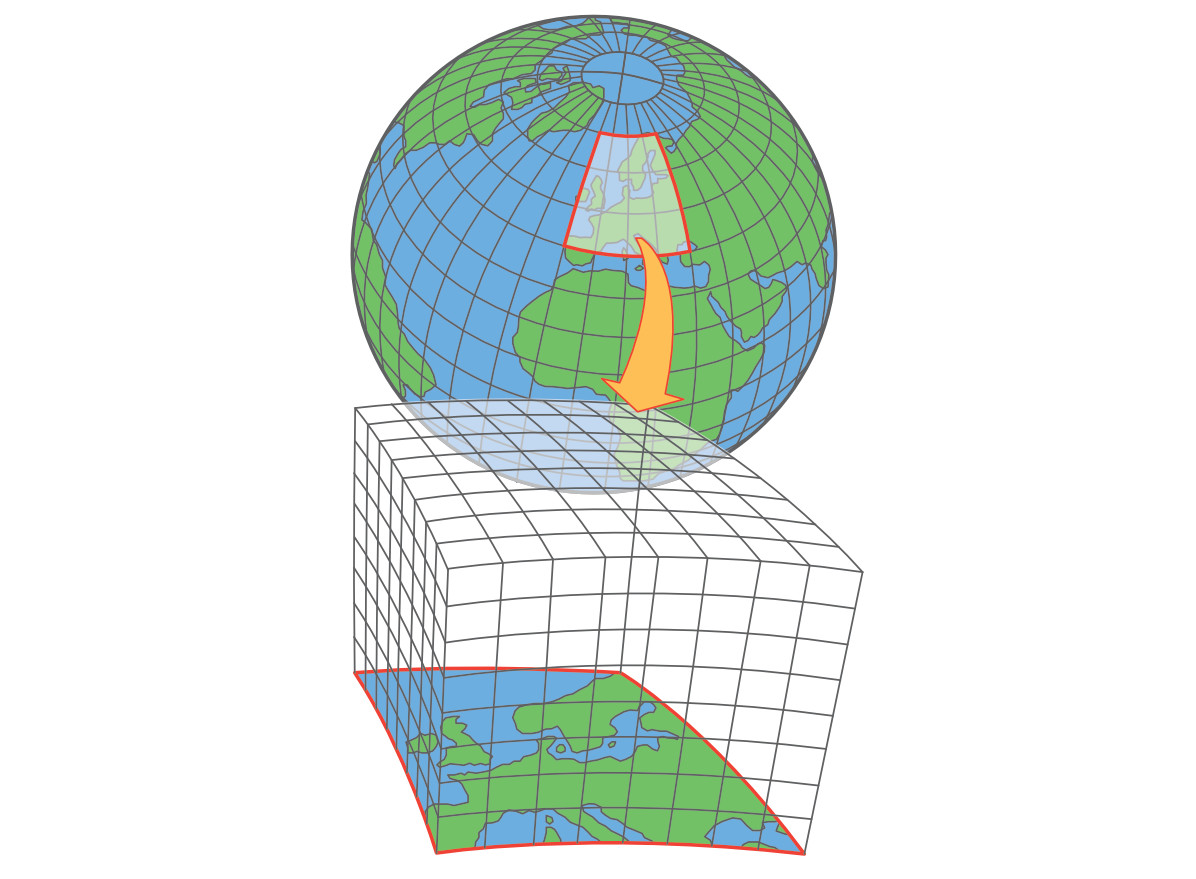
Based on the forecast length, weather forecast models can be classified as
very short range (less than one day)
short range (1-3 days),
medium range (3-15 days)
long range (over 15 days)
forecast models (the exact classification limits do vary somewhat, however). With long-range forecasts, the spatial resolution is usually coarser due to the computing capacity limitations, whereas higher resolution can be afforded in short-range forecasts. For very short-range models, a spatial resolution of up to one to two kilometres, or even less, can be used.
13.9.2021